
How to Measure & Improve DA
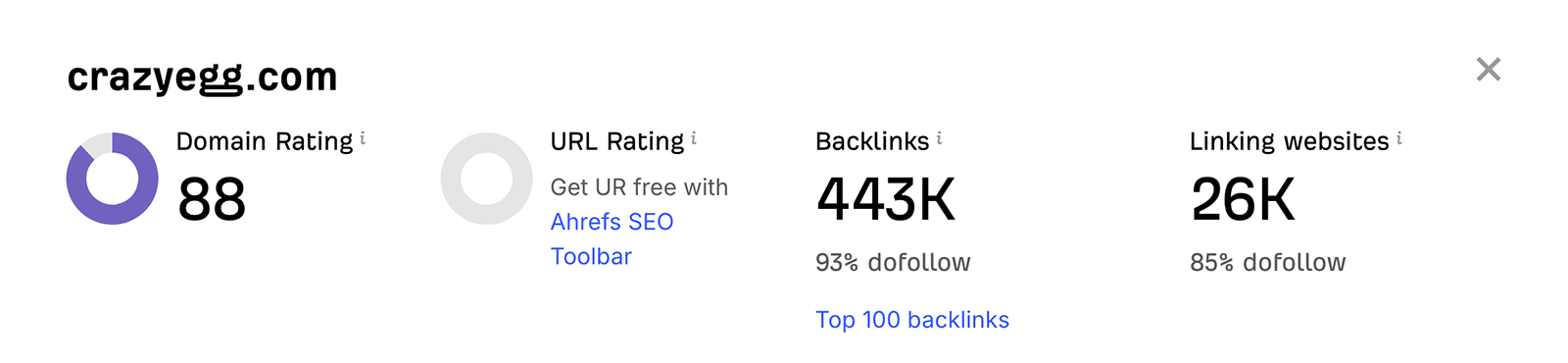

If you don’t know your domain authority, you don’t know how well your site can compete against others in your space. This metric gives you a number to check against competitors and see where you stand.
This guide shows you how to check domain authority, when it matters for your SEO strategy, and how to improve it over time.
What Is Domain Authority?
Domain authority (DA) is a metric that predicts a site’s likelihood to rank in relevant search results. It uses a logarithmic scale of 1 to 100: The higher the score, the more likely the site is to rank.
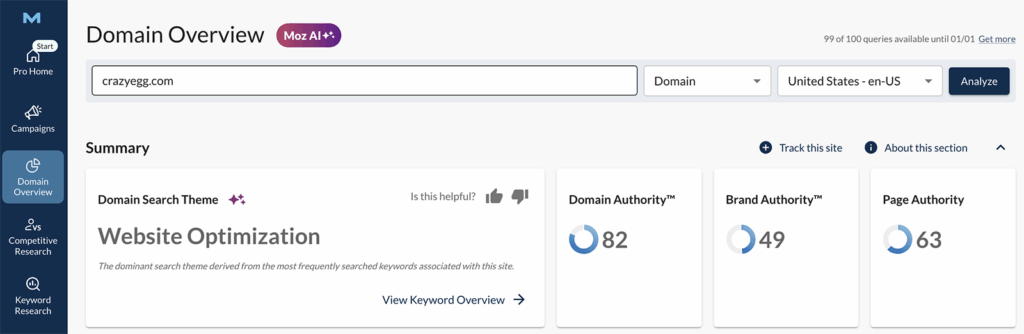
Moz originally developed this scoring system. But today, most SEO tools have their own version of domain authority score. For example, Ahrefs has a domain rating metric, while SE Ranking has a domain trust score.
Why You Should Care About Domain Authority
DA is important because it tells you how well your site is positioned to perform in organic search. It also gives you a single data point to easily compare the authority of two or more websites.
Think of this metrics as a measure of how trustworthy your site is. If your site has a higher DA, more sites have opted to link to it. This suggests your site is more reputable and your content is stronger than the competition.
However, domain authority isn’t a Google ranking factor, as Search Engine Journal and many other sources are quick to explain.
As Google Search Advocate John Mueller has said numerous times over the past decade, the search engine’s ranking factors tend to be more granular. And Google doesn’t consider DA when ranking content on search engine results pages (SERPs).
Domain Authority vs. Page Authority: What’s the Difference?
Domain authority and page authority (PA) are similar in that both metrics use a logarithmic scale of 1 to 100, and both are based primarily on backlinks.
But DA reflects the strength of your website’s domain, while PA reveals the strength of an individual page — like a product page or a blog post. This means the PA for a page could be completely different from the website’s domain authority.
Say you publish a groundbreaking report in your industry that generates thousands of backlinks. The PA for the page may end up being significantly higher than the DA. This can help the page rank for relevant search terms, even if the website’s authority isn’t particularly high.
How Domain Authority Is Calculated
Each tool uses its own proprietary algorithm to calculate DA, but all prioritize backlink metrics. The most important factors for DA are:
- Number of linking domains: The total number of sites that link to yours
- Quality of linking domains: The DA of the linking sites
- Number of backlinks: The total number of backlinks to your site
Some DA tools also consider factors like organic traffic and spam indicators. More search traffic typically means your site ranks for relevant keywords, which naturally drive traffic — the opposite of spam. In contrast, sites that don’t rank for any keywords or that have far more links than traffic can indicate spam.
How to Check Your Domain Authority
To check your DA, use one of the free tools from Moz, Ahrefs, SE Ranking, or any other SEO platform. Plug in your domain and review the results.
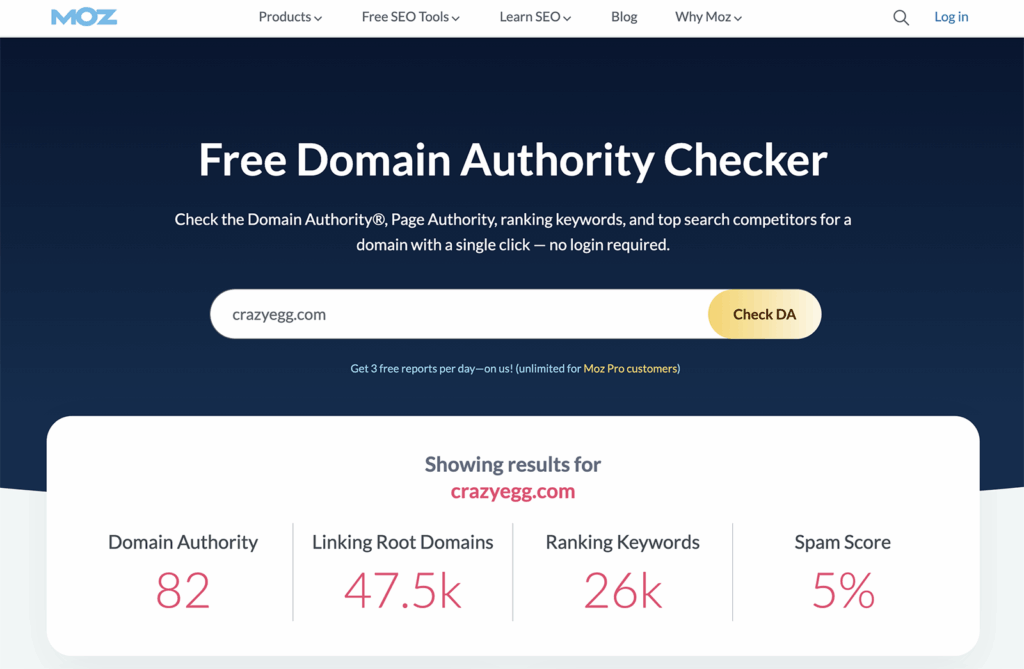
For example, the Moz Free Domain Authority Checker shows DA as well as the total number of linking root domains, ranking keywords, and spam score. It also shares lists of top pages by links, top linking domains, and other SEO data.
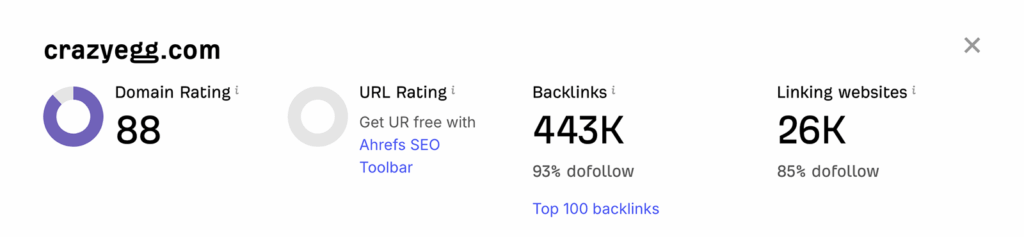
The Ahrefs Website Authority Checker shows a more limited set of data: domain rating, backlink count, linking websites, and a list of the site’s top 100 backlinks.
These free tools are helpful for getting snapshots of any site’s domain authority. But an SEO platform like Moz is much more helpful for monitoring this score over time. It automatically tracks DA and many other SEO performance metrics so you can see how and when they change — and identify what moves the needle.
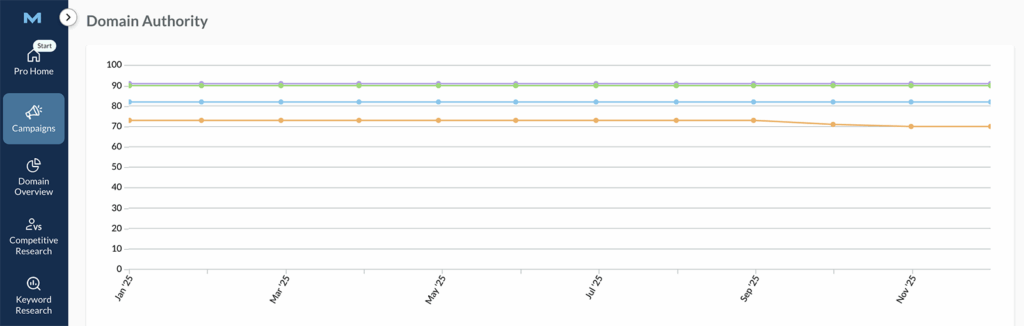
The specific tool you choose to measure your DA doesn’t matter. What’s important is choosing one tool and sticking with it. Since each SEO platform has its own version of the domain authority metric, you’ll see irrelevant fluctuations if you check SE Ranking one month and Moz the next.
What’s a Good Domain Authority?
There’s no one DA score that’s considered “good.” Domain authority is a relative metric, so a good DA score is simply one that’s higher than competitors in your niche.
That said, here are some domain authority basics to keep in mind:
New sites start from the beginning, so a low DA often indicates a very new site. However, a low DA can also reflect a spammy site that isn’t trustworthy.
Because DA checkers use a logarithmic scale to calculate this score, it’s somewhat easy to increase your domain authority from 1 to 10.
But raising your DA from 90 to 100 is incredibly difficult. This process takes substantial time and effort.
When Domain Authority Matters
Before you get too in the weeds with DA, you need to know when to pay attention to this metric. Here’s when domain authority matters:
- Competitive benchmarking: When you’re comparing your site to direct competitors as part of your overall SEO strategy and reporting
- Link opportunity evaluation: When you’re considering whether it’s really worth putting in the effort to earn links from a specific website
- Long-term progress tracking: When you’re preparing quarterly or annual reports to review your SEO performance
When to Ignore Your DA
Domain authority doesn’t always need to be your main focus. It’s less important when you’re monitoring a brand new site. If your site launched in the last six months, don’t worry about tracking DA.
You don’t need to consider DA when making day-to-day content strategy decisions either. Don’t let a low DA dissuade you from creating high-quality content that targets important keywords.
And if your site is already ranking for relevant keywords and attracting SEO traffic from your target audience despite a low DA, don’t stress. Increasing domain authority takes time.
How to Improve Your Domain Authority
Use these tactics to improve your website’s domain authority over time.
Set Appropriate Expectations
Be realistic about how quickly you can improve DA. Most significant increases take months or years, not days. And the higher your DA already is, the slower the progress will be.
So, instead of aiming to increase your site’s domain authority from 10 to 20 in a couple of weeks, track improvements each month or quarter. For a site with a DA over 70, expect real progress to take years.
Secure More High-Quality Backlinks
Prioritize earning more backlinks from a wider range of websites. Securing multiple links from one website doesn’t hurt, since it adds to your total number of backlinks.
But your main priority should be link building on authoritative sites. For example, industry publications, respected blogs, and local news sites can all provide high-quality backlinks.
Use a DA tool or SEO platform to check domain authority for any site you’re considering asking for a link. When you reach out, make a compelling case for a backlink. Why would the site benefit from linking to yours?
Create Content Worth Linking To
When you make a habit of publishing original, informative content, you’re more likely to earn backlinks from authoritative sites. Skip the generic content and consider publishing:
- Comprehensive guides and tutorials that help your audience solve complex problems independently. Like Figma’s website design tutorial, which walks you through the essential phases and shows you how to complete each one with Figma.
- Free tools and resources that answer questions or provide personalized information. Like Zillow’s mortgage calculator, which breaks down your estimated mortgage payment (including taxes and insurance) based on your home price, down payment, interest rate, and loan type.
- Case studies and customer stories that reveal the results customers get from using your products or services. Like this Gong case study that shows how ADP increased its enterprise win rate and average customer lifetime value using the revenue software.
- Original research reports that share unique data that helps your audience understand the industry or make business decisions. Like the Mindbody State of the Industry Report, which examines current trends driving health and fitness businesses.
Fix Your Toxic Backlinks
Not all backlinks are good. Many can compromise your profile and decrease your domain authority.
Monitor your toxic backlinks by checking your spam score. Ideally, you want this score to be lower than 30%, which Moz considers a low spam score.
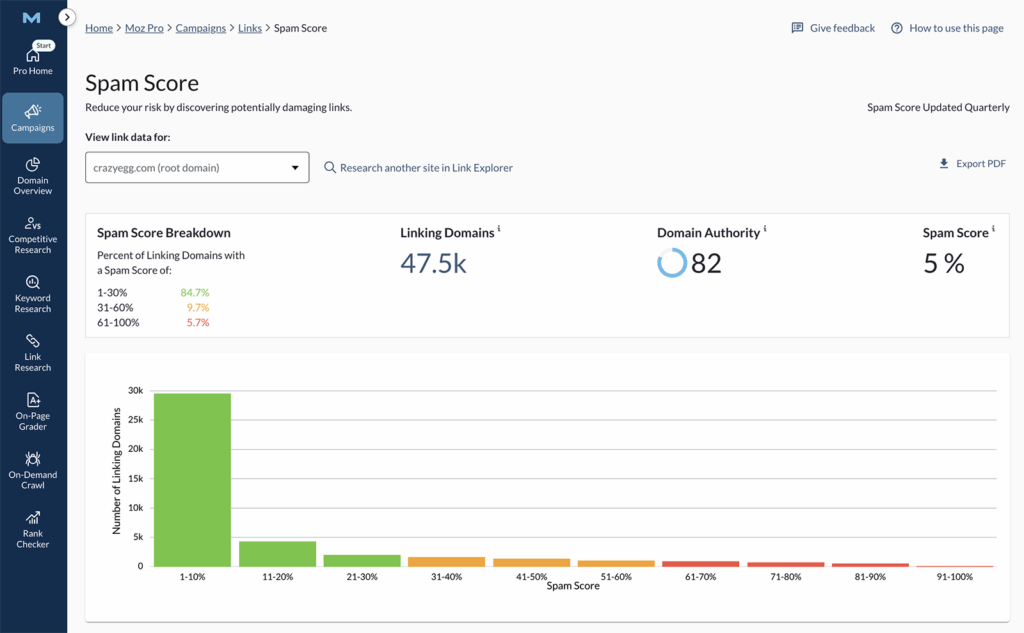
If it’s higher, scroll through the list of links contributing to this score. Look for links from irrelevant sites, link farms, and sites in languages that aren’t relevant to your target audience.
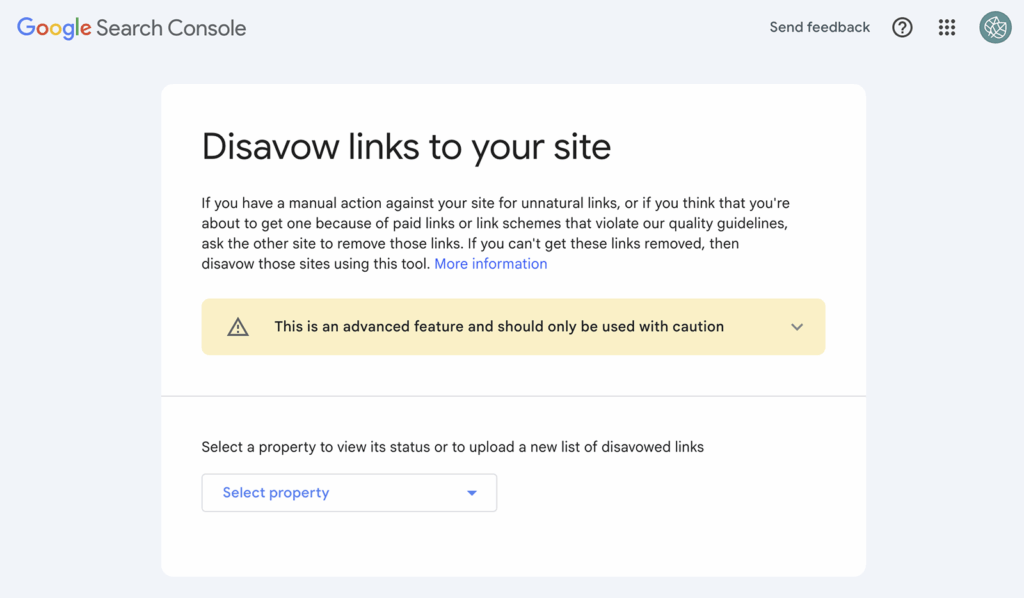
Build a list of spammy links, and then use the Google Search Console tool to disavow links to your site. Note that Google recommends disavowing links only when you have a large number of spammy links and if you either have a manual action against your site or you’re concerned you’ll get one. In other words, use this tool with caution.
Improve Your Internal Linking
While domain authority is largely based on your backlink profile, managing inbound links isn’t the only way to increase DA. It’s also helpful to optimize your site’s internal linking strategy.
This tactic:
- Passes authority (known as link juice) from stronger pages to weaker ones, distributing link equity throughout your website
- Helps search engines better understand your site structure, which improves crawlability and can increase the likelihood your content will rank
- Upgrades engagement, which can signal a higher quality site and contribute to better SEO performance
Common Domain Authority Mistakes to Avoid
As you work to improve your site’s authority, watch out for these missteps.
Making DA Your Main Goal
Achieving a high domain authority is a great outcome. But it shouldn’t be your main objective.
Remember, DA is a score developed by Moz, an SEO tool. Instead of focusing your efforts on this metric, concentrate on goals that are crucial to both SEO performance and business success.
For example, focus on ranking for keywords that matter to your business. Or attracting more qualified search traffic. Or generating more conversions and revenue.
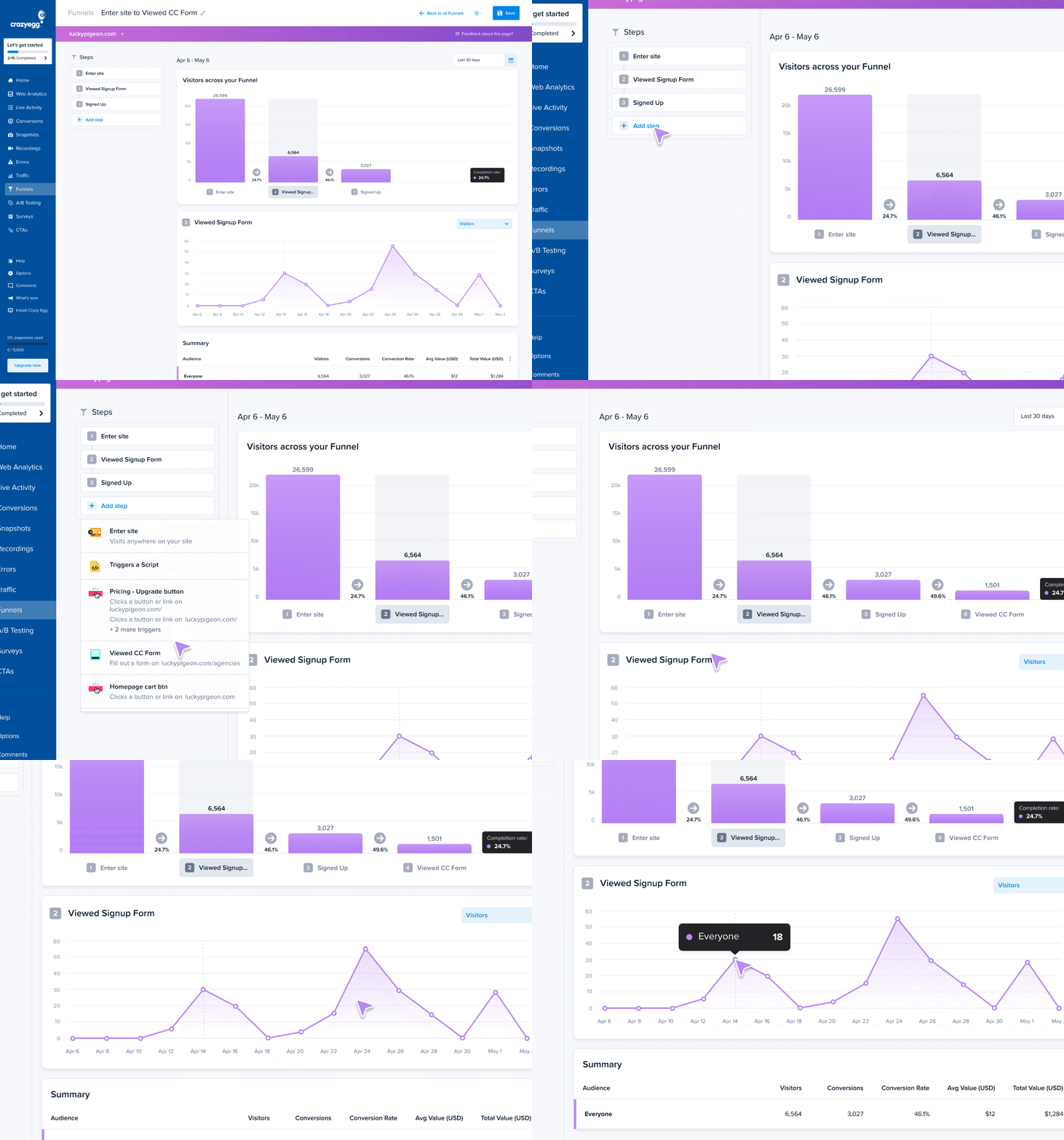
A high DA won’t matter if none of your site visitors convert. With Crazy Egg’s Funnels report, you can see how your audience engages with your site and where they drop off, so you can improve funnels and drive more conversions.
Comparing Your DA to Irrelevant Sites
Domain authority is a comparative metric. But it’s only helpful if you use it to compare your site to others in your space.
Say you’re managing a website for a cooking studio. Comparing your site’s DA to Amazon’s DA doesn’t give you any useful information. Instead, compare your site to your competition.
Panicking Over DA Fluctuations
DA scores don’t always go up, even if you’re working hard to increase yours. It’s normal for domain authority to periodically experience minor drops.
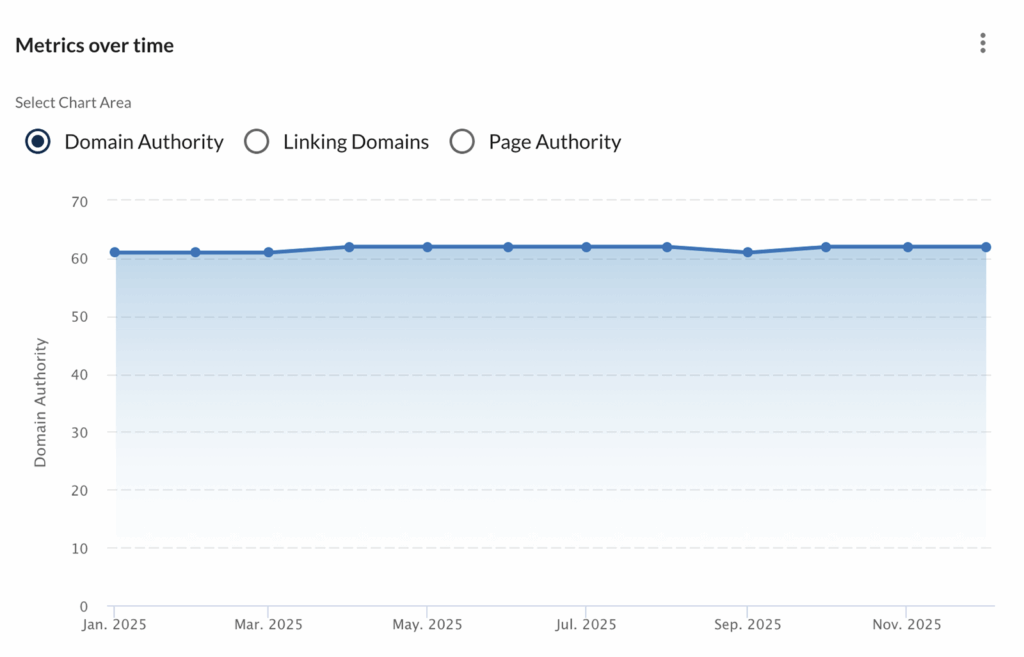
However, it is a good idea to reassess if you notice a sustained downward trend. If your DA has decreased for multiple months in a row, you may need to take action.
Chasing Link Volume Instead of Link Quality
Earning 100 backlinks from a handful of low-authority (i.e., sites with a DA under 20) probably won’t improve your DA as much as getting 10 links from 10 different high-authority industry sites.
Remember: Domain authority values the number of linking domains and their authority. Rather than trying to maximize the number of backlinks you have, focus on link quality.
Buying DA Boosting Services
No service can legitimately improve your DA overnight. Anyone promoting domain authority boosting services is likely using tactics that will get your site penalized. This can result in manual actions against your site and cause you to lose money and progress.
Instead, use proven ways to increase domain authority. Focus on building links, producing high-quality content, or guest posting on relevant websites.
