
Optimizely Review—The Good and the Bad
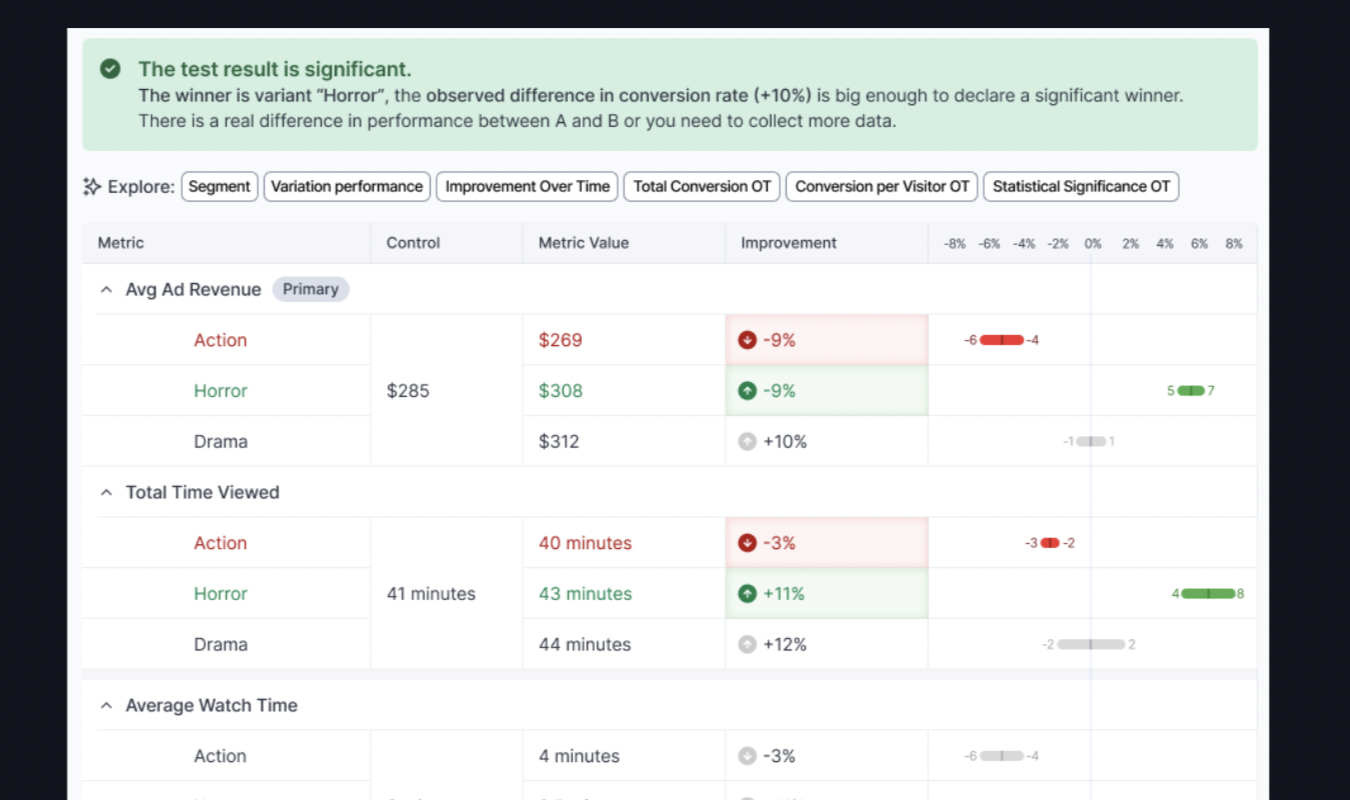

Optimizely is an experience and experimentation platform that helps you test, personalize, and optimize your websites and apps.
It offers a broad range of tools, from A/B and multivariate testing to content management, feature flags, and personalization. Every high-tech feature is custom-built to improve both the individual customer journey and your product’s overall performance.
It’s an impressive range, and it means Optimizely is ideal for marketing and UX teams who want to make decisions based on an absolute wealth of data.
But Optimizely isn’t for everyone. Its feature set can be overwhelming for users without tons of experience or technical savviness. And the cost of Optimizely’s products can climb quickly as you grow.
In this review, we’ll walk through the good and the bad of Optimizely.
If you need more choices to compare it with, see our top Optimizely alternatives.
How Does Optimizely Compare to Its Closest Competitors?
Optimizely’s biggest competitors are VWO (Visual Website Optimizer) and Adobe Target.
VWO is more beginner-friendly than Optimizely, with a lower learning curve and accessible pricing to match. It handles A/B testing, heatmaps, surveys, and session recordings in one place.
But while VWO is a solid tool for beginners, it doesn’t offer the same depth or enterprise-level capabilities as Optimizely does. Especially when it comes to creating brand-aligned content or rolling out new features on your app or website.
Adobe Target, meanwhile, is Optimizely’s closest rival as far as enterprise tools go. Both tools offer extensive testing capabilities, AI-powered content creation, and infinite configuration options.
The difference is that Adobe generally only comes as part of the Adobe Experience Cloud ecosystem, which can mean (much) higher cost and complexity. (As one Redditor put it, “[Adobe] is way too costly, and the whole of the Adobe business model is like a trap.” You have to be sure you want to commit before you take the leap.)
Optimizely is more flexible and easier to manage without having to marry yourself to the entire Adobe suite.
In short:
- Choose Optimizely if you want enterprise experimentation with built-in, AI-powered content creation to run tests, manage content, and roll out new features from one platform.
- Choose VWO if you’re newer to experimentation, want a simple onboarding experience, or need built-in heatmaps and surveys in the same tool you use for split-testing.
- Choose Adobe Target if you’re already heavily invested in Adobe’s ecosystem and have the resources to manage large-scale personalization at the enterprise level.
Optimizely Review: The Good and the Bad
There’s a lot to appreciate about Optimizely. But there are also a few things that might hold it back from being ideal for you, depending on your team, your size, and your technical know-how.
Let’s dive in.
What Optimizely is Good At
A powerful and flexible experimentation platform. Optimizely’s biggest strength is its testing engine. The platform excels at letting you run A/B tests, multivariate tests, and personalization campaigns with all the control you could ask for.
Want to test different layouts? Headlines? Entire user flows? Feature rollouts? You can do all of that inside Optimizely with (relative) ease.
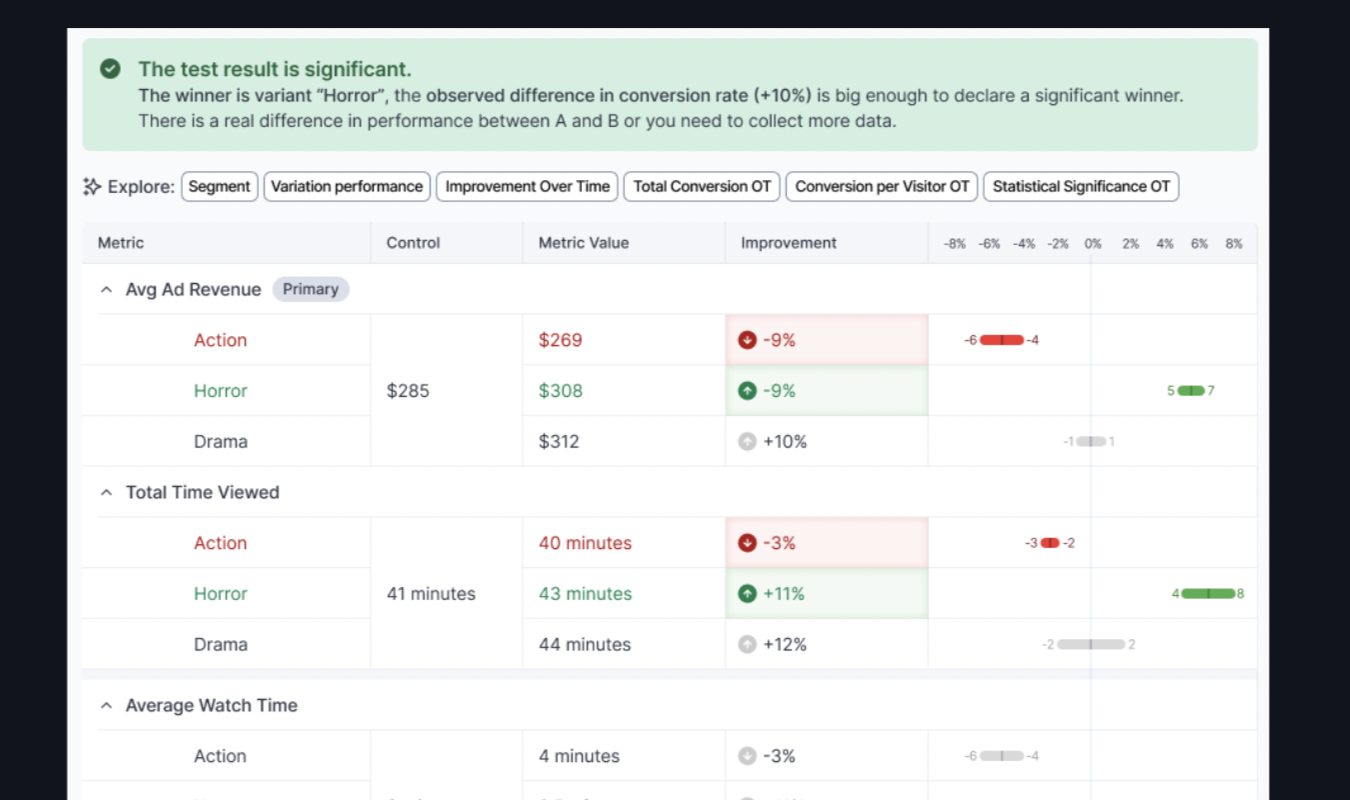
The tool is built to help you understand not just whether something works, but how and why customers behave differently across variations.
Feature flags and progressive rollouts baked in. I love that for product teams, Optimizely supports feature flags. This tool allows you to release new features gradually and test them with specific audiences.
If something breaks or doesn’t click with your crowd, you can instantly roll back the changes and try again.
This feature makes experimentation safer for your brand and gives your team more control over launches.
Personalization tools for every type of user experience. Optimizely includes personalization capabilities that let you deliver different experiences to different segments of your audience.
You can split up your customers based on behavior, location, device type, or customer attributes, and then create specific campaigns for each segment.
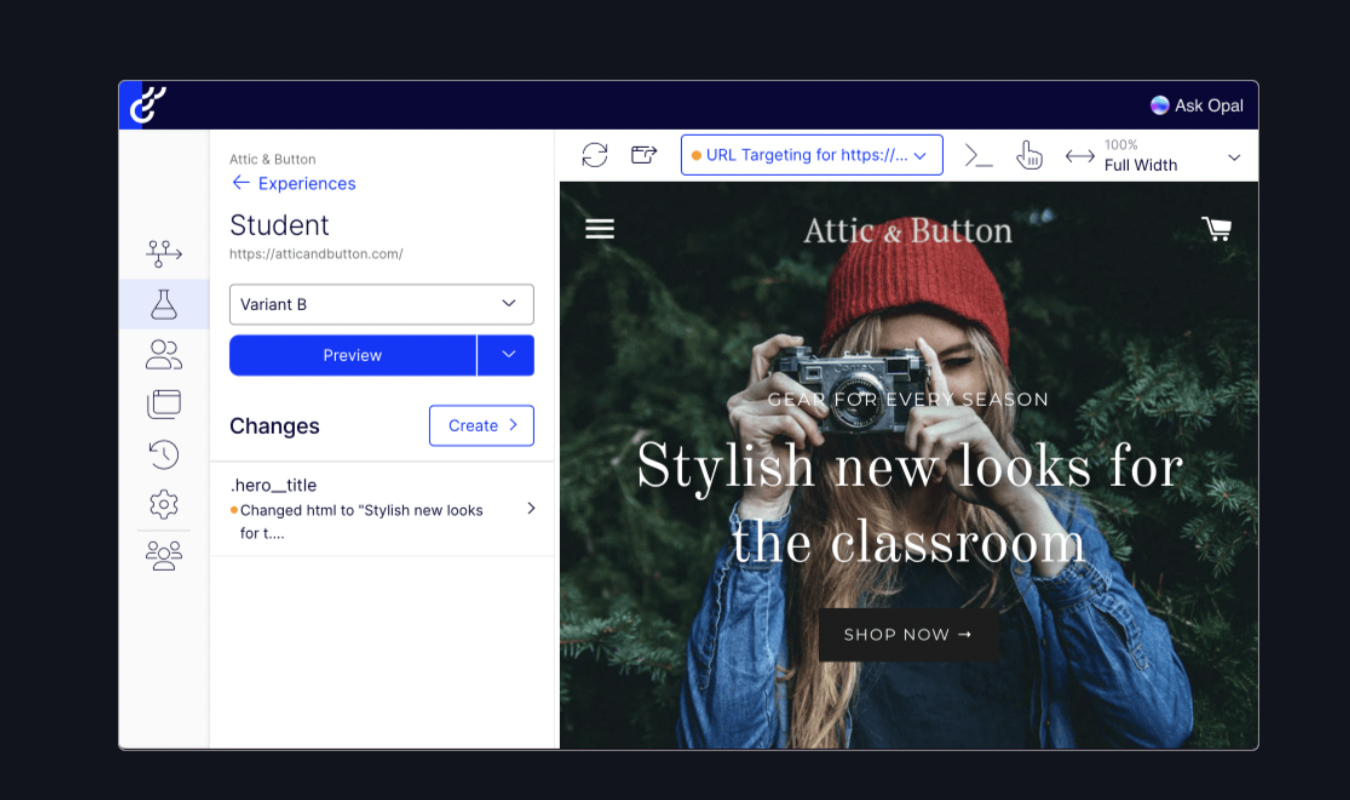
This is especially helpful for teams that need to manage large websites or complicated, multi-step conversion funnels.
With Optimizely, you can customize experiences for all sorts of segments: new vs. returning users, specific types of customers (like students, working parents, or retirees), or make your conversion paths more effective.
Designed for enterprise teams and complicated digital environments. Optimizely gets a full chance to shine for organizations where marketing, product, and engineering teams constantly overlap and influence each other.
While a more basic tool like VWO would struggle to keep up with this elaborate dance, Optimizely has tools to manage it effortlessly. It shines as a dance leader, if you will, across multiple departments, including:
- Editors who want to adjust brand content
- Marketers who want to run highly targeted campaigns
- Product teams that need to test features before an official roll-out
- Analysts who want detailed, always-fresh performance insights
Basically, Optimizely is ideal for organizations where complex experimentation is a daily part of how your digital team works.
A flexible platform that’s always a step ahead. Optimizely used to be known as the A/B testing tool. Not anymore—by which I mean, it’s not solely known for experimentation anymore.
It has fully branched into…well, everything: a content management system (CMS) and content marketing platform with feature flags, AI-powered personalization in the form of Optimizely Opal, and deep analytics.
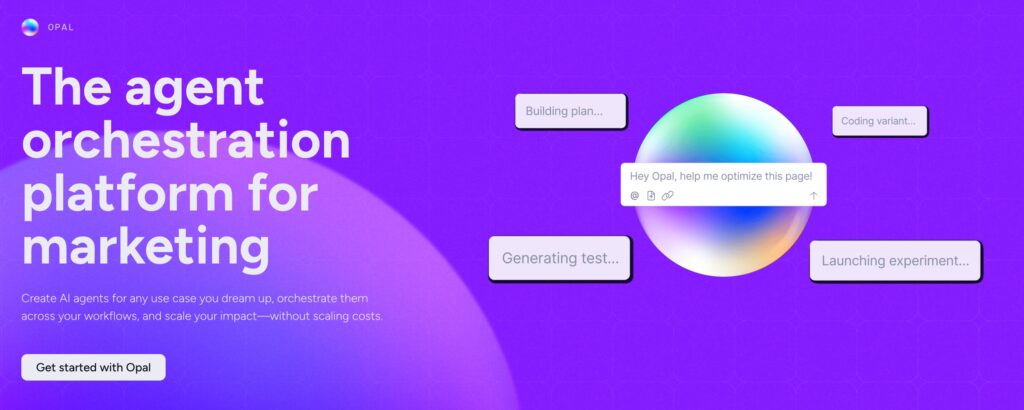
Whether you see that as ambition or pure empire-building is up to you, but one thing’s clear: Optimizely isn’t interested in being a single-purpose tool. It’s trying to be the place where your whole, entire digital experience lives.
You can’t say Optimizely won’t keep up with the times. But this can be a drawback as well as a plus.
Potential Optimizely Drawbacks
Pricing that scales faster than you’d like. Optimizely’s pricing has a reputation for being…well, let’s just call it very, very enterprise.
Some companies report paying staggeringly high prices—think upward of $50,000 a year
It’s not that the pricing is unfair, exactly. The suite of features is impressive and ideal for the enterprise clients it serves.
But unfortunately, the pricing is opaque and I’m always leery of companies that don’t openly publish a pricing page. Even if all they can offer is a starting price.
Since everything in Optimizely is based on quotes rather than set plans with verified limits, it’s easy to walk in thinking you’re buying a testing tool. Meanwhile, you might walk out with a platform that costs more than your marketing budget allows.
Traffic-based pricing also means your bill can grow just because your website grew. Of course, a growing website is a good thing and is exactly why you’re considering Optimizely in the first place. But in the Optimizely pricing ecosystem, growth comes with higher costs.
Setup requires technical support and a decent amount of planning. Here’s the thing: Optimizely can do a lot, but only after you set it up the right way. And that setup isn’t something you knock out over a coffee break. Or even a weekend.
You’ll need developers to set up and implement experiments, add the right tracking, manage feature flags, and make sure everything is firing properly behind the scenes. If you cut corners here, your data gets messy very quickly. And we all know how useful messy data is (hint: it’s just not).
So unless you’ve got developers who aren’t already drowning in Jira tickets, you have to expect some friction as you get things off the ground.
In short, if your team is new to experimentation or you don’t have a dedicated growth team, Optimizely can feel completely overwhelming. And frankly, you probably don’t need it if you fall into one of these categories.
I appreciate the way this Reddit user put it on r/webdev: ” [Optimizely is] solid and one of the big guys on ‘customize your experience’. [But] they don’t work with small clients, you need around 100k active users per month. You need to understand your customer segments, what kpi’s to set to, and what hypothesis to run.”
Importantly, most people “sign up with them after having some other cheaper tool and needing more capabilities,” according to this user.
This confirms my analysis that Optimizely is great for enterprise clients but not so helpful for SMBs.
Requires internal buy-in and ongoing attention. Enterprise-level tools like Optimizely only work if your team actually uses them.
If experiments sit half-finished, or if no one checks results, or if features never get rolled out gradually, you’re basically paying for a gym membership you never use. But times a thousand, because even the priciest gym membership doesn’t come close to what Optimizely costs.
Keep in mind that Optimizely wants to be part of your ongoing workflow—not just an occasional weekend project. If you don’t have the processes in place to support that, it can feel like the tool is too much. When really, your organization is overpaying for a tool you didn’t really need.
Optimizely Pricing, Plans, and Add-Ons
Optimizely doesn’t publish standard pricing for its products. You have to request pricing for every single product, from the content marketing platform and split testing features to analytics and personalization.
From the Optimizely pricing page, it’s unclear whether you can bundle different products or whether you must purchase each one individually.
I tried to use the Optimizely chatbot to get questions answered about general, ballpark pricing, but I had to enter a business email just to get started. And then, I couldn’t actually ask questions—I was directed to a booking module to schedule an appointment with a salesperson.

This is a downside, IMO. Why not just give general ranges or starting points for potential customers to explore?
Is Optimizely Right for You?
Optimizely is a powerful platform for teams that need to make constant decisions based on a steady stream of real user behavior data.
If you run a website, app, or product where conversions matter and you want to use hard, cold data to optimize features, Optimizely gives you the tools to do just that.
That said, Optimizely isn’t the best fit if you:
- Just need simple A/B tests
- Don’t have dev support
- Have a small team
- Want heatmaps and surveys
- Don’t want enterprise-level pricing
Tools like VWO or lighter experimentation platforms may give you everything you need without the overhead. Crazy Egg is also an excellent alternative to Optimizely with affordable heatmapping, A/B testing, and session replay features. We also offer four free tools for you to get started:
- A full web analytics platform that rivals Google Analytics 4
- On-page surveys
- Instant heatmaps
- Conversion analytics
Try out our free tools for yourself.

